Welcome to handicraft
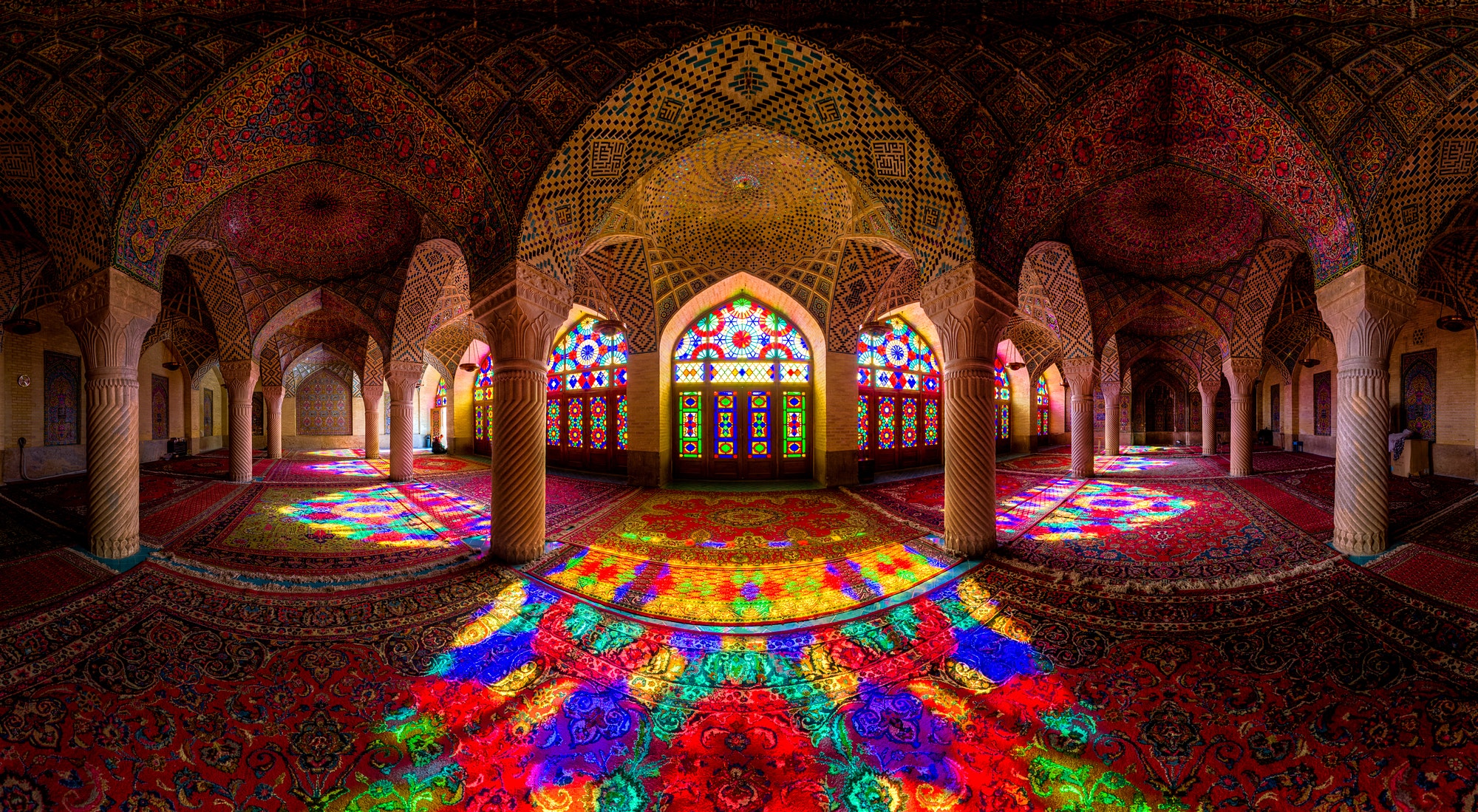
Celebrated as the heartland of Persian culture for over 2000 years, Shiraz has become synonymous with
education, nightingales, poetry and wine. It was one of the most important cities in the medieval
Islamic world and was the Iranian capital during the Zand dynasty (AD 1747–79), when many of its most
beautiful buildings were built or restored.A city of poets, Shiraz is home to the graves of Hafez and
Sa’di, both...
Etymology
The earliest reference to the city is on Elamite clay tablets dated to 2000 BCE, found in June 1970,
while digging to make a kiln for a brick factory in the south western corner of the city. The tablets
written in ancient Elamite name a city called Tiraziš.[11] Phonetically, this is interpreted as
/tiračis/ or /ćiračis/. This name became Old Persian /širājiš/; through regular sound change comes the
modern Persian name Shirāz. The name Shiraz also appears on clay sealings found at a 2nd-century CE
Sassanid ruin, east of the city. By some of the native writers, the name Shiraz has derived from a son
of Tahmuras, the third Shāh (King) of the world according to Ferdowsi's Shāhnāma
History
Shiraz is most likely more than 4,000 years old. The name Shiraz is mentioned in cuneiform inscriptions
from around 2000 BC found in southwestern corner of the city.[13] According to some Iranian mythological
traditions, it was originally erected by Tahmuras Diveband, and afterward fell to ruin.[12] The oldest
sample of wine in the world, dating to approximately 7,000 years ago, was discovered on clay jars
recovered outside of Shiraz (according to the referenced article, this discovery was made in Hajji Firuz
Tepe, a Neolithic village in Iran's northern Zagros Mountains, more than a thousand kilometers north of
Shiraz).[14]
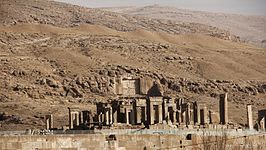
In the Achaemenian era, Shiraz was on the way from Susa to Persepolis and Pasargadae. In Ferdowsi's
Shāhnāma it has been said that Artabanus V, the Parthian Emperor of Iran, expanded his control over
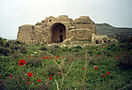
Shiraz. Ghasre Abu-Nasr (meaning "the palace of AbuNasr") which is originally from Parthian era is
situated in this area. During the Sassanid era, Shiraz was in between the way which was connecting
Bishapur and Gur to Istakhr. Shiraz was an important regional center under the Sassanians
Climate
Shiraz’s climate has distinct seasons, and is overall classed as a hot semi-arid climate (Köppen: BSh),
though it is only a little short of a hot-summer Mediterranean climate (Csa).[28] Summers are hot, with
a July average high of 38.8 °C (101.8 °F). Winters are cool, with average low temperatures below
freezing in December and January. Around 300 mm (12 in) of rain falls each year, almost entirely in the
winter months, though in some cases as much as this has fallen in a single month (as in January 1965 and
December 2004),[30] whilst in the year from July 1965 to June 1966 as little as 82.9 millimetres (3.3
in) fell. The wettest year has been 1955/1956 with as much as 857.2 millimetres (33.75 in), though since
1959 the highest has been around 590 millimetres (23.2 in) in each of 1995/1996 and 2004/2005.
Economy
The earliest reference to the city is on Elamite clay tablets dated to 2000 BCE, found in June 1970,
while digging to make a kiln for a brick factory in the south western corner of the city. The tablets
written in ancient Elamite name a city called Tiraziš.[11] Phonetically, this is interpreted as
/tiračis/ or /ćiračis/. This name became Old Persian /širājiš/; through regular sound change comes the
modern Persian name Shirāz. The name Shiraz also appears on clay sealings found at a 2nd-century CE
Sassanid ruin, east of the city. By some of the native writers, the name Shiraz has derived from a son
of Tahmuras, the third Shāh (King) of the world according to Ferdowsi's Shāhnāma
Culture
The earliest reference to the city is on Elamite clay tablets dated to 2000 BCE, found in June 1970,
while digging to make a kiln for a brick factory in the south western corner of the city. The tablets
written in ancient Elamite name a city called Tiraziš.[11] Phonetically, this is interpreted as
/tiračis/ or /ćiračis/. This name became Old Persian /širājiš/; through regular sound change comes the
modern Persian name Shirāz. The name Shiraz also appears on clay sealings found at a 2nd-century CE
Sassanid ruin, east of the city. By some of the native writers, the name Shiraz has derived from a son
of Tahmuras, the third Shāh (King) of the world according to Ferdowsi's Shāhnāma
Tourist attractions in Shiraz
The tombs of Hafiz,[49] Saadi, and Khaju e Kermani (whose tomb is inside a mountain above the city's
old
Qur'an Gate). Other lesser known tombs are that of Shah Shoja' (the Mozafarid emir of Persia, and
patron
of Hafiz), and the Haft Tanan mausoleum, where seven Sufi mystics are buried. The Tomb of Baba Kuhi
sits
atop a mountain overlooking the city, and the tomb of Karim Khan Zand is at the Pars Museum of
Shiraz.
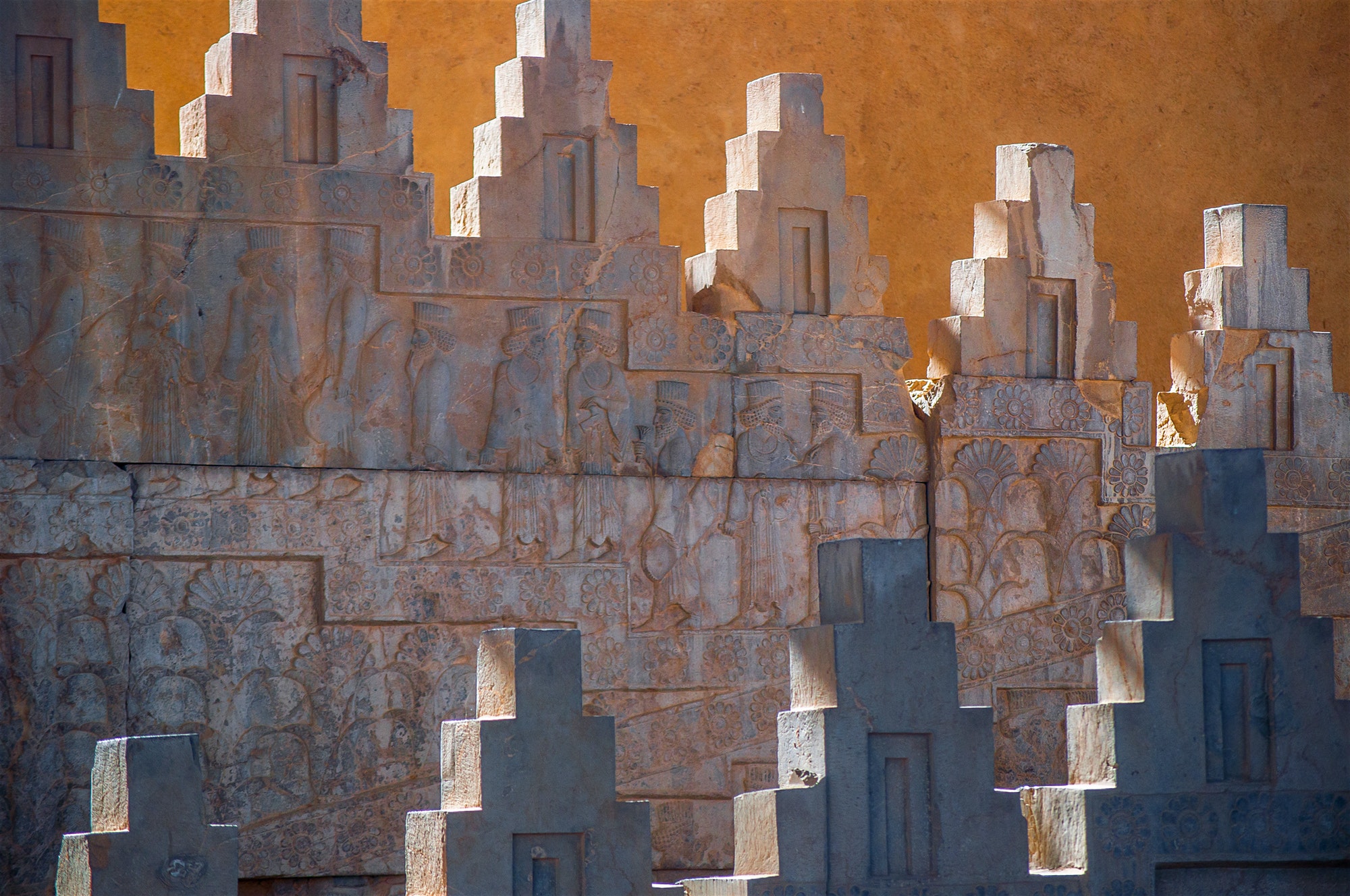
The oldest mosque is Atigh Jame' Mosque, which is one of the older mosques of Iran, followed by
Vakil
Mosque and Nasir al-Mulk mosque. The Vakil Mosque is situated west of the famous Vakil Bazaar. It
covers
an area of 8,660 square metres (93,200 square feet) and was built in 1187 (AH) during the Zand
Dynasty.
On the two sides of the entrance gate there are magnificent tile-works and arches. The left and
right
corridors of the entrance gate are connected to the main room.
The citadel of Arg of Karim Khan sits adjacent to the Vakil Bazaar and Vakil Bath at the city's
central
district. The most famous of houses are Zinat-ol-Molook House and Gahavam's House, both in the old
quarters of the city.
The Qur'an Gate is the entrance to Shiraz. It is located near the gorge of Allah-o-Akbar and is
flanked
by the Baba Kuhi and Chehel Maqam mountains. The gateway is where two copies of the Qurans known.
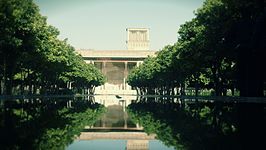
The Eram Garden (Bagh-e Eram) in Shiraz is a striking location for visitors with a variety of plants
as
well as a historic mansion. Although the exact date of the construction of the garden is not clear,
historical evidence suggests it was constructed during the Seljuk Dynasty on the orders of the
celebrated Seljuk monarch Sanjar. Other historical Persian gardens are Afifabad Garden and The
Museum of
Weapons, Delgosha Garden and Jahan Nama Garden.
Neighborhoods of Shiraz
The earliest reference to the city is on Elamite clay tablets dated to 2000 BCE, found in June 1970,
while digging to make a kiln for a brick factory in the south western corner of the city. The tablets
written in ancient Elamite name a city called Tiraziš.[11] Phonetically, this is interpreted as
/tiračis/ or /ćiračis/. This name became Old Persian /širājiš/; through regular sound change comes the
modern Persian name Shirāz. The name Shiraz also appears on clay sealings found at a 2nd-century CE
Sassanid ruin, east of the city. By some of the native writers, the name Shiraz has derived from a son
of Tahmuras, the third Shāh (King) of the world according to Ferdowsi's Shāhnāma
Neighborhoods of Shiraz
The earliest reference to the city is on Elamite clay tablets dated to 2000 BCE, found in June 1970,
while digging to make a kiln for a brick factory in the south western corner of the city. The tablets
written in ancient Elamite name a city called Tiraziš.[11] Phonetically, this is interpreted as
/tiračis/ or /ćiračis/. This name became Old Persian /širājiš/; through regular sound change comes the
modern Persian name Shirāz. The name Shiraz also appears on clay sealings found at a 2nd-century CE
Sassanid ruin, east of the city. By some of the native writers, the name Shiraz has derived from a son
of Tahmuras, the third Shāh (King) of the world according to Ferdowsi's Shāhnāma